
KEY TAKEAWAYS
- Site-specific Safe Work Method Statements (SWMS) must reflect actual ground conditions, access and plant on that site.
- Underground/overhead service strikes, trench collapse and mobile plant interactions are primary civil focus areas.
- Daily pre-start briefings update controls as site geometry changes from open pad to deep trenches and concrete pumping.
Why Groundworks Require Dynamic Risk Planning
Unlike an enclosed fit-out where floors and walls stay static, a civil and foundations site changes shape every afternoon. Haul roads shift, trenches open and close, weather alters batter stability, and heavy agitator trucks interface with line or boom pumps.
Because conditions evolve rapidly, pre-construction safety planning maps each stage—demolition/clearing, bulk earthworks, detailed trenching, steel fixing and concrete placement—so physical controls are ready before high-risk tasks start.
Core Focus Areas on Civil and Structural Sites
While every site carries unique surroundings, four hazard categories consistently anchor pre-start planning on civil and concrete works:
- Underground & Overhead Services: Reviewing utility plans, potholing underground assets, marking exclusion zones for overhead powerlines and verifying concrete pump boom clearances.
- Excavation & Trench Stability: Assessing soil cohesion, surcharges and moisture; battering, benching or shoring excavations to prevent wall collapse; and maintaining safe entry/exit access.
- Mobile Plant & Traffic Separation: Defining physical walkways, spotter protocols, reversing visibility, haul-truck loading zones and council-compliant street traffic management where deliveries interface with public roads.
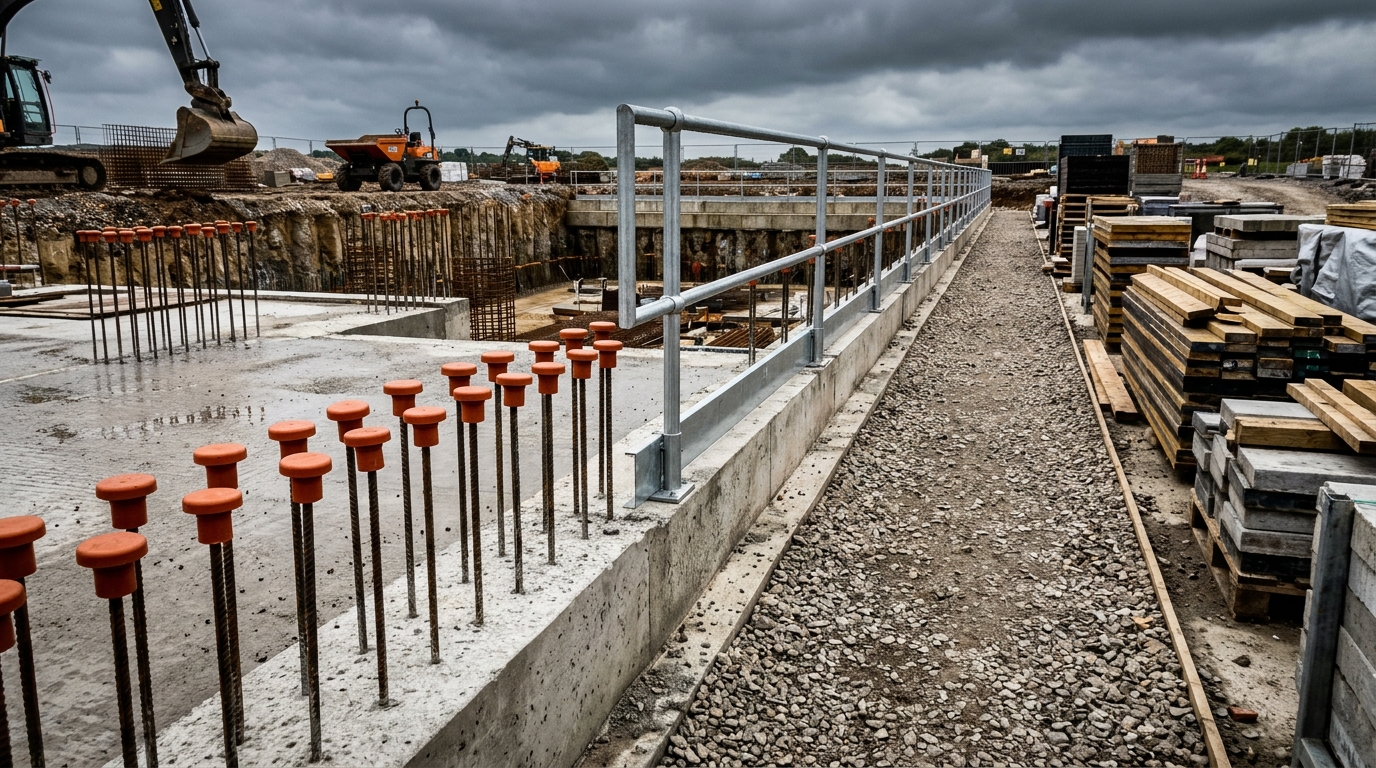
- Reinforcement, Formwork & Concrete Pumping: Capping exposed starter bars against impalement, verifying formwork bracing and pump outrigger bearing ground, and managing manual handling and alkaline concrete skin/eye protection.
Task-Specific SWMS and Daily Pre-Starts
Generic templates filed in a site folder add little value if operators never adapt them to the block in front of them. Practical WHS coordination pairs concise, task-specific Safe Work Method Statements with short daily pre-start huddles whenever new trades arrive, weather shifts or concrete pours commence.
Technical Note: Principal contractors, builders and site supervisors must ensure all high-risk construction work complies with applicable Australian state or territory WHS legislation and Codes of Practice.
Housekeeping Is Structural Safety
A tidy site is also an accurate site. Stacked reinforcement, clear perimeter walkways, fenced excavations and organised waste zones reduce trip injuries while allowing surveyors, engineers and crews to inspect work thoroughly.